We're an architectural studio based in Mumbai with offices in Bangalore and Trivandrum.
From beautiful homes for lovers to strategic defence spaces for the military and workplaces for high-performance technology startups, we constantly aspire to create a form language that is unusually resistant to time.

On Portfolios and How to Hire an Architect
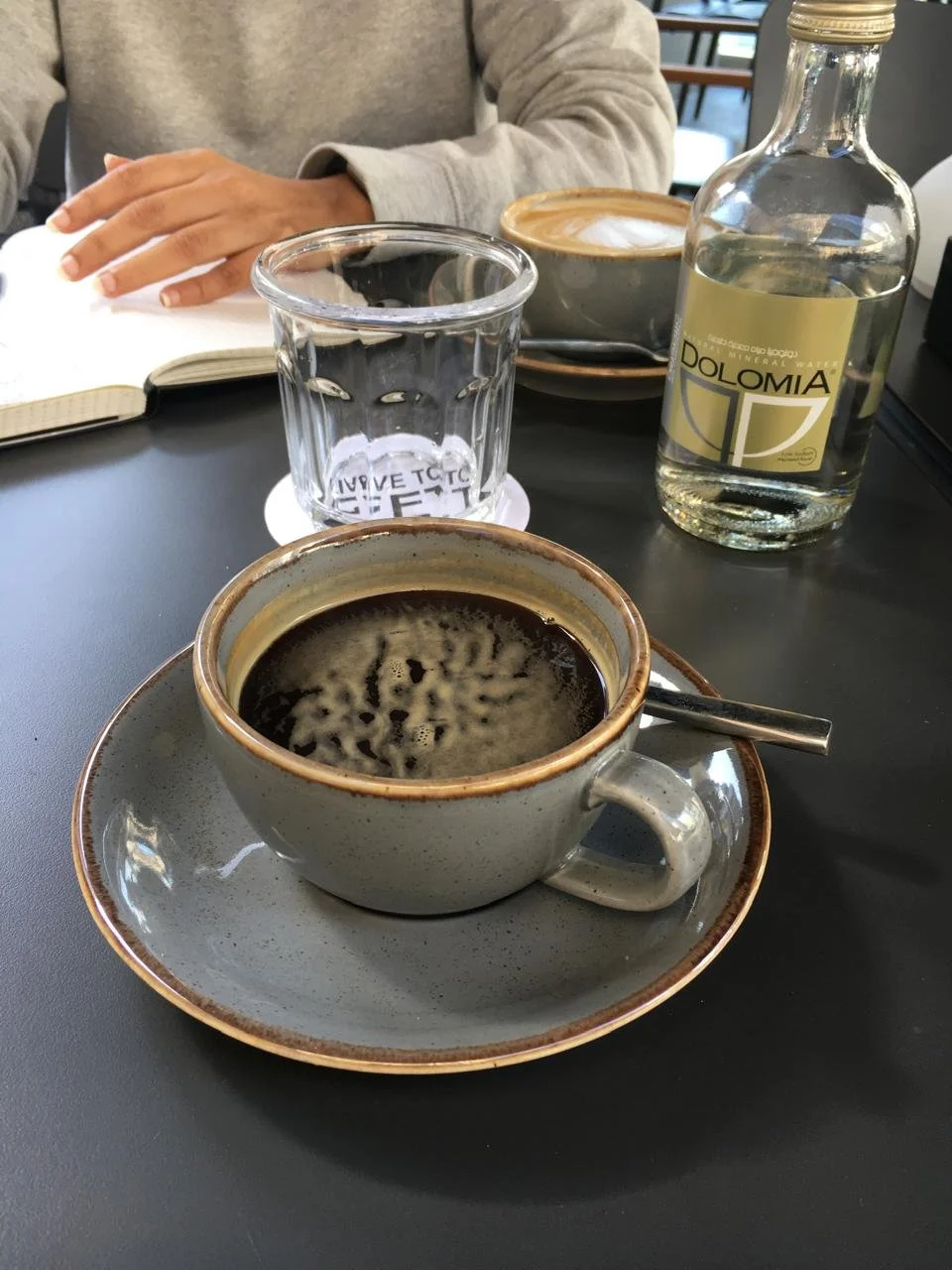
I am writing this at a small table, with coffee going cold, watching a building across the street that nobody ever photographs. It is a good building. It has stood there long enough to stop performing. I want to talk to you the way that building talks to the street — quietly, and about everything at once — because you are probably going to hire an architect soon, perhaps me, perhaps someone else, and nobody has ever told you how.
They will show you portfolios. I will too, if you ask. But a portfolio is a photograph of other people's happiness. It tells you what I did for someone who is not you, on land that is not yours, for a life you have not lived. Hiring an architect from a portfolio is like choosing a lover from their letters to someone else. Beautiful, perhaps. Instructive, even. But the letters were not written to you.
So let me tell you instead what I actually believe, and you can decide whether you want to be believed at by me.
I believe you do not hire an architect. You reveal yourself in front of one. This is the part no one says over the first coffee, amid the polite arithmetic of square footage. What we will actually negotiate, you and I, is intimacy.
You will hand me your mornings — the angle at which light touches your face for the next forty years, the sound your feet make crossing to the kitchen, the exact quality of silence in the room where you will one day grieve. A building is the most prolonged embrace you will ever accept from another person's mind. I take that seriously. I would like you to as well.
And I believe my real job — the one under the drawings — is to negotiate with your nostalgia. You will arrive with a childhood verandah you have not mentioned to anyone in years. A grandmother's kitchen. A sea you grew up beside, or wanted to. You may not tell me about these things, but they will be in the room anyway, sitting at the table, occasionally reaching over to move my pencil. Nostalgia always attends the meetings. The only question is whether it comes as a partner or a saboteur, and that depends entirely on whether we let it speak.
People ask me what makes architecture, as opposed to mere building. I have an answer, though it is really ten answers, and they do not arrive in order. They arrive the way thoughts arrive at a café table — one summoning the next.
A silhouette, first. A building touches you from a distance before it touches you in detail, the way you know someone you love by their walk before you can see their face. I want to make buildings you could recognise from the train, half-asleep, in bad weather. Not buildings that shout — a silhouette that shouts is not unique, it is insecure — but a profile you could find in the dark.
And simplicity, though I mean something specific by it. Simplicity is not the absence of things; it is the presence of one thing, said completely. A kitchen that nourishes is a simple kitchen: it knows its job is the feeding of people and it refuses every ambition that isn't that. A kitchen for cooks is simpler still — reduced not to emptiness but to essence, the way a broth is a reduction and not a dilution. I distrust simplicity that looks like a magazine. True simplicity has flour on her hands while she combs your hair and you are late for school.
I love symmetry, and I love it the way one loves an old rule made to be leaned against. We are bilateral animals; we recognise ourselves in a balanced façade as we do in a mirror. But perfect symmetry exists to be broken by life. The corner where you make your morning tea will never be at the centre of the plan. Breakfast in bed happens on one side of the mattress. I will draw you the order. You will supply the beautiful asymmetry of actually living, and the building will be better for the argument.
Every building I have loved was secretly about something else. A house that is really a harbour. A pavilion for salons that is really a stage for the oldest human theatre — talk — a roof held just high enough for ideas to circulate like air. If you ask me what your building is pretending to be, I will laugh, and then I will answer seriously, because the metaphor is poetic. It is the thing the building whispers to you at night after the guests have gone.
I will not lie to you with materials, which is a way of saying I will not lie to you at all. Concrete will be allowed to be concrete. Wood will be permitted its knots, its grain, its slow argument with humidity. An architect who paints plywood to look like marble will eventually paint a budget to look like a promise. And there is a sensuality in truthful material that no imitation reaches — real stone cool underfoot on a June morning, brass agreeing to record every hand that touches it. I want your building to age the way I hope you will: openly, and into character.
Somewhere in the work, if we do it properly, there will be a moment that frightens us both. The wall that isn't there. The window placed for one hour of one season. The place to steal a kiss — and yes, that is a design decision; courage is what carves privacy out of openness, the alcove the plan didn't strictly need, the turn in the stair where two people can be briefly invisible to the world. I have learned to sit with a frightening drawing for a week before I am allowed to kill it. Where nothing was risked, nothing was loved.
The engineering, when it is amazing, will decline to be thanked. The cantilever that should not hold, holding. The span that lets a room finish its sentence without a column interrupting. But the deepest engineering is the invisible kind: a place to dip your foot and dream is, structurally, a small hydrological miracle — weight, waterproofing, the patient physics of stillness — all hidden so completely that what you experience is only water, only your foot, only the dream.
Your building will arrive into a conversation that started before it — a street, a climate, a neighbourhood's idea of itself — and it must say something back. Not necessarily loudly. Sometimes the most radical act on a street of glass is a wall of brick; sometimes the challenge is to be quieter than everything around you. But there must be a position. We must challenge the context. A building that agrees with everything believes in nothing, and I am afraid the same is true of architects.
And there will be a story underneath it all, because buildings are where families keep their stories. A place to tell stories to the next generation is not a media room. It is a limit a grandmother can manage, an acoustic warmth that makes a voice at dusk sound like a voice at dusk, a floor that forgives long sitting. When I say I want your project to have a brilliant backstory, I mean both directions at once: where the design was born — before the site, before the brief — and what will be told in it fifty years from now, by someone who has not been born, about someone who is in the room with us today.
Between all of these — and this may be the most Parisian cafe thing I believe, so forgive me, the coffee is finished — are the transitions. A corridor is not the movement of bodies; it is the movement of minds. The passage where a thought you carried out of one room changes before you enter the next. I give the spaces between rooms the same love I give the rooms, because that is where you will do your actual thinking. It is where I am doing mine now.
That is nine things, if you have been counting. I said there were ten.
The tenth is you.
I can bring the silhouette, the honesty, the nerve, the mathematics, and occasional physics. I cannot bring the ideal client, and without one, none of the rest fully arrives. So here is what I ask, in exchange for everything above. Say what you want in one sentence, and bear how much that sentence reveals. Tell me the real budget, the real marriage, the real worry about the staircase and your mother's knees. When a drawing frightens you, sit with the fear for a week before you kill it — I will be sitting with you. And bring the verandah, the grandmother's kitchen, the sea. Bring them openly, so we can negotiate with them together rather than be ambushed by them separately.
You came here, perhaps, expecting a portfolio. But great buildings are not hired into existence. They are conceived, and conception — as every metaphor in this letter has been trying to tell you — requires two.
Come with your nostalgia, your desire, your crossed-out lines.
I'll bring the nine.
with love,
Shubh Cheema